Driver Navigator offers a professional solution for device drivers backup, restoration, update and removal
in Windows 7 , XP , 8 system. It identifies all the hardware in the
system, extracts their associated drivers from the hard disk and backs
them up to a location of your choice. Then when you format and
reinstall/upgrade your operating system, you can restore all the "saved"
drivers just as if you had the original driver diskettes in your hands.
After one system reboot, your PC will be loaded and running with the
required hardware drivers.
What's more, Driver Navigator has
2,000,000+ Database with Daily Update & Professional Navigator™
Driver-Scan Engine ,Based on a huge database of over 4,000,000+ driver
entry, Driver Navigator has been updating everyday in order to ensure
your pc system is up-to-date all the time!
With our powerful
Industry-leading “Navigator™ Technology”, Driver Navigator makes your
driver scanning, detecting & downloading much faster than expected!
or you can download the drivers navigator from this link:
http://www.driversdownloader.com/drivers_download/DriverNavigator_Setup.exe
Thursday, December 20, 2012

Why do I need to update my Drivers
By default Windows contains generic drivers for many different types of
hardware connected to your computer. Unfortunately, many of these
drivers that are bundled with Windows tend to be generic and do not
support all of the advanced features of the hardware being installed.
Therefore you would want to download and install the driver created by
the hardware manufacturer so that Windows understands how to use these
special features.
Also as time goes by, hardware manufacturers release new versions of their drivers to fix bugs, increase performance, increase stability on your computer, or add new features. When these drivers are released it is recommended that you upgrade your driver to take advantage of these new enhancements.
When new drivers are released they tend to come in two types of updates. The first type is a program that you run that will automatically update the driver for you and then prompt you to reboot your computer. The second type is a set of driver files that you need to manually update the drivers with. This tutorial will focus on teaching you how to upgrade your driver using both methods.
or you can just download this drivers downloader and update your drivers very easyly.

Also as time goes by, hardware manufacturers release new versions of their drivers to fix bugs, increase performance, increase stability on your computer, or add new features. When these drivers are released it is recommended that you upgrade your driver to take advantage of these new enhancements.
When new drivers are released they tend to come in two types of updates. The first type is a program that you run that will automatically update the driver for you and then prompt you to reboot your computer. The second type is a set of driver files that you need to manually update the drivers with. This tutorial will focus on teaching you how to upgrade your driver using both methods.
or you can just download this drivers downloader and update your drivers very easyly.
How To Find Drivers
How To Find Drivers
The Process
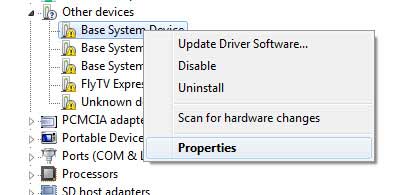
- Go to your device manager. You can find it at Control Panel>System>Hardware>Device Manager.
- If you have any device with its driver missing, you will be able to see the device labeled as Unknown Device
with a yellow exclamatory sign. - Right click the unknown device you will find details after you click properties.
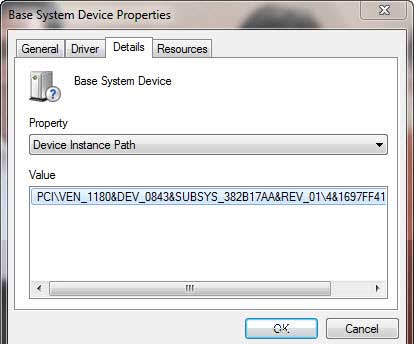
- Now, navigate to the Details tab and select the Device Instance Path form the drop down list.
- You will be able to see the Instance path similar to:
PCI\VEN_1180&DEV_0843&SUBSYS_382D17AA&REV_05\4&1697FF41&0&22F0 - Now, copy the Vendor ID and Device Id of the device in a notepad. The one in REDis Vendor ID and the one in GREEN
is device ID.
or the other is always missing. Once we want to clean device drivers for our system.
If we miss some of the drivers, nothing works fine. Here are some ways to find unknown device drivers in Windows.

Subscribe to:
Comments (Atom)