Thursday, March 21, 2013

Thursday, December 20, 2012
Drivers Backup , Restore & Uninstal
Driver Navigator offers a professional solution for device drivers backup, restoration, update and removal
in Windows 7 , XP , 8 system. It identifies all the hardware in the
system, extracts their associated drivers from the hard disk and backs
them up to a location of your choice. Then when you format and
reinstall/upgrade your operating system, you can restore all the "saved"
drivers just as if you had the original driver diskettes in your hands.
After one system reboot, your PC will be loaded and running with the
required hardware drivers.
What's more, Driver Navigator has 2,000,000+ Database with Daily Update & Professional Navigator™ Driver-Scan Engine ,Based on a huge database of over 4,000,000+ driver entry, Driver Navigator has been updating everyday in order to ensure your pc system is up-to-date all the time!
With our powerful Industry-leading “Navigator™ Technology”, Driver Navigator makes your driver scanning, detecting & downloading much faster than expected!
or you can download the drivers navigator from this link:
http://www.driversdownloader.com/drivers_download/DriverNavigator_Setup.exe
What's more, Driver Navigator has 2,000,000+ Database with Daily Update & Professional Navigator™ Driver-Scan Engine ,Based on a huge database of over 4,000,000+ driver entry, Driver Navigator has been updating everyday in order to ensure your pc system is up-to-date all the time!
With our powerful Industry-leading “Navigator™ Technology”, Driver Navigator makes your driver scanning, detecting & downloading much faster than expected!
or you can download the drivers navigator from this link:
http://www.driversdownloader.com/drivers_download/DriverNavigator_Setup.exe
Why do I need to update my Drivers
By default Windows contains generic drivers for many different types of
hardware connected to your computer. Unfortunately, many of these
drivers that are bundled with Windows tend to be generic and do not
support all of the advanced features of the hardware being installed.
Therefore you would want to download and install the driver created by
the hardware manufacturer so that Windows understands how to use these
special features.
Also as time goes by, hardware manufacturers release new versions of their drivers to fix bugs, increase performance, increase stability on your computer, or add new features. When these drivers are released it is recommended that you upgrade your driver to take advantage of these new enhancements.
When new drivers are released they tend to come in two types of updates. The first type is a program that you run that will automatically update the driver for you and then prompt you to reboot your computer. The second type is a set of driver files that you need to manually update the drivers with. This tutorial will focus on teaching you how to upgrade your driver using both methods.
or you can just download this drivers downloader and update your drivers very easyly.

Also as time goes by, hardware manufacturers release new versions of their drivers to fix bugs, increase performance, increase stability on your computer, or add new features. When these drivers are released it is recommended that you upgrade your driver to take advantage of these new enhancements.
When new drivers are released they tend to come in two types of updates. The first type is a program that you run that will automatically update the driver for you and then prompt you to reboot your computer. The second type is a set of driver files that you need to manually update the drivers with. This tutorial will focus on teaching you how to upgrade your driver using both methods.
or you can just download this drivers downloader and update your drivers very easyly.
How To Find Drivers
How To Find Drivers
The Process
- Go to your device manager. You can find it at Control Panel>System>Hardware>Device Manager.
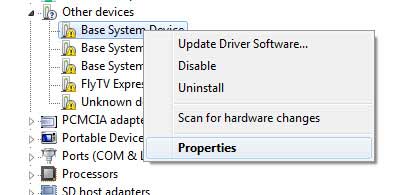
- If you have any device with its driver missing, you will be able to see the device labeled as Unknown Device
with a yellow exclamatory sign. - Right click the unknown device you will find details after you click properties.
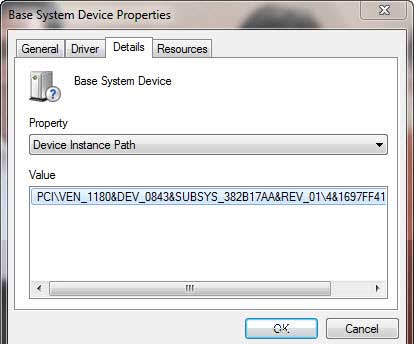
- Now, navigate to the Details tab and select the Device Instance Path form the drop down list.
- You will be able to see the Instance path similar to:
PCI\VEN_1180&DEV_0843&SUBSYS_382D17AA&REV_05\4&1697FF41&0&22F0 - Now, copy the Vendor ID and Device Id of the device in a notepad. The one in REDis Vendor ID and the one in GREEN
is device ID.
or the other is always missing. Once we want to clean device drivers for our system.
If we miss some of the drivers, nothing works fine. Here are some ways to find unknown device drivers in Windows.

Monday, November 19, 2012
Driver FAQ
What if I’m desperate – I’ve got an old piece of hardware and can’t find the driver anywhere. What should I do?
Sometimes you’ll inherit a very old piece of kit that works fine, or you’ll somehow delete or lose the driver for an old piece of hardware you own. If it works just fine for your purposes you understandably won’t want to just throw it out, but if it’s quite old you may have trouble finding a driver for it. Incidentally, one thing everyone should do is keep back ups of the essential drivers burned on a CD Rom. But assuming you haven’t done this you can try asking if anyone has the driver. Websites like this encourage these questions and try to track down any drivers missing from their collection, and there are various tech forums where you could try posting the message. You could also try using a driver for the nearest model you can find – it might work, but there are no guarantees!
Why won’t any driver from a given manufacturer work on all their devices?
This is because the driver is the software that has the job of translating the windows instructions into things the hardware understands. For this it needs a clear understanding of the capabilities of the hardware. If you have a driver that describes a different piece of hardware, it’s not going to be able to do the translation properly. Sometimes it will work, sometime not – but the best bet is to use the right driver to get the full capabilities from the hardware.
How do I find the right driver for my hardware?
The right driver for the hardware is likely to be the one that came with it. If you have a disc from the manufacturer then use that. If not, some devices can work well with the Plug and Play driver capabilities in Windows XP and Windows NT based systems. Plug and Play means that Windows itself detects the hardware and chooses a driver from its internal library. If neither of these apply, then you need to search for the driver. You can search at the manufacturer’s website or via one of the well organized website databases like this one. To do this however you need to know the manufacturer and the model.
Sometimes you’ll inherit a very old piece of kit that works fine, or you’ll somehow delete or lose the driver for an old piece of hardware you own. If it works just fine for your purposes you understandably won’t want to just throw it out, but if it’s quite old you may have trouble finding a driver for it. Incidentally, one thing everyone should do is keep back ups of the essential drivers burned on a CD Rom. But assuming you haven’t done this you can try asking if anyone has the driver. Websites like this encourage these questions and try to track down any drivers missing from their collection, and there are various tech forums where you could try posting the message. You could also try using a driver for the nearest model you can find – it might work, but there are no guarantees!
Why won’t any driver from a given manufacturer work on all their devices?
This is because the driver is the software that has the job of translating the windows instructions into things the hardware understands. For this it needs a clear understanding of the capabilities of the hardware. If you have a driver that describes a different piece of hardware, it’s not going to be able to do the translation properly. Sometimes it will work, sometime not – but the best bet is to use the right driver to get the full capabilities from the hardware.
How do I find the right driver for my hardware?
The right driver for the hardware is likely to be the one that came with it. If you have a disc from the manufacturer then use that. If not, some devices can work well with the Plug and Play driver capabilities in Windows XP and Windows NT based systems. Plug and Play means that Windows itself detects the hardware and chooses a driver from its internal library. If neither of these apply, then you need to search for the driver. You can search at the manufacturer’s website or via one of the well organized website databases like this one. To do this however you need to know the manufacturer and the model.
HOW TO Install Windows Driver
when we find drivers need updating or need installed to the system.
Before we start there is one key thing we need check for the driver installation to go smoothly. Have you got the right driver? Don’t be tempted to use the NT driver for an XP computer, nor is it worth using a driver that is designed for a model that is ‘close but not quite the same’ as your piece of hardware. If it’s an external piece of hardware the model number etc are usually on there somewhere, either on top or maybe under the unit (where you’ll often find the serial number), so check them. Also think about if you really need to change over your driver, particularly if you’re considering something with a BETA in the title. Take this to mean unstable (beta means ‘in testing’ or unstable in computer jargon, sometimes the aren’t ironed out). I personally wouldn’t consider a beta version driver if the driver I’m already using is doing the job.
Okay, let’s assume that you’ve found the driver on the internet. The first thing you need to do is download it. As with all downloads you need to be able to find it again once you’ve downloaded it. It might be worth saving it to the desktop or even to a new folder you made called ‘drivers’. Whatever works for you. The other option is that you have the driver on a floppy or CD Rom that came with the device – this is even easier: usually you just put it in the drive and follow the instructions. Drivers these days come in two distinct types. The easiest for the general user are those drivers that come as part of an executable file (one that ends with .exe). It’s a good idea to scan the file with your virus scanner before doing anything, particularly if you’ve downloaded it. Once you’ve done that, just double click on the file name. It should do the rest – as always read any questions that it asks you. When it stops doing things, it’s done. Often it will ask you to restart Windows for the change to take effect.
The other type isn’t self-running like this and you’ll need to install them manually. This isn’t that hard however, and we’ll go through it step by step. First you need to find the ‘Device Manager’. If you don’t know where this is then click on ‘Start’ (bottom left hand corner of the XP screen), then click ‘Control Panel’, click ‘Performance and Maintenance’ and then click on ‘System’. You’ll get a new window that has multiple tabs. Click on the tab called ‘Hardware’ and you’ll see the device manager – click on the name to bring it up. This method is similar in all windows set ups, and all work from a command line instead – to do this go to ‘Start’, choose ‘Run’ and type devmgmt.msc in the box. This will also bring up the device manager.
From here it’s pretty much following instructions. The device manager lists all the devices you have and you can double click on them to bring up a further window that lists the device properties. Click the tab for driver and you get all the details you need. You’re looking at ‘Update Driver’, and normally you want to say no to the suggestion that Windows initiates a search via the Microsoft 站点site because you already have the disc or file. Select no thanks, and click next. If you have the disc you choose it on the next screen, if you are looking for the file you’ve downloaded choose the option to select from a list (don’t be put off by the word ‘advanced’). The next screen again offers to search for you, again you decline the offer. Having chosen ‘don’t search’ you can use the button on the right below the list (called ‘have disc’). This opens a familiar dialogue just like all the windows file open boxes. Find the driver files where you stored them - you’re looking for the file that ends .inf. Double click on it and wait for the installation to finish -don’t interrupt the installation. You’ll probably have noticed that in the device manager window there was an option to return to the previous driver. This is what you need to use if updating the driver seems to have made things worse. And that’s it, you’ve installed the new driver.
Before we start there is one key thing we need check for the driver installation to go smoothly. Have you got the right driver? Don’t be tempted to use the NT driver for an XP computer, nor is it worth using a driver that is designed for a model that is ‘close but not quite the same’ as your piece of hardware. If it’s an external piece of hardware the model number etc are usually on there somewhere, either on top or maybe under the unit (where you’ll often find the serial number), so check them. Also think about if you really need to change over your driver, particularly if you’re considering something with a BETA in the title. Take this to mean unstable (beta means ‘in testing’ or unstable in computer jargon, sometimes the aren’t ironed out). I personally wouldn’t consider a beta version driver if the driver I’m already using is doing the job.
Okay, let’s assume that you’ve found the driver on the internet. The first thing you need to do is download it. As with all downloads you need to be able to find it again once you’ve downloaded it. It might be worth saving it to the desktop or even to a new folder you made called ‘drivers’. Whatever works for you. The other option is that you have the driver on a floppy or CD Rom that came with the device – this is even easier: usually you just put it in the drive and follow the instructions. Drivers these days come in two distinct types. The easiest for the general user are those drivers that come as part of an executable file (one that ends with .exe). It’s a good idea to scan the file with your virus scanner before doing anything, particularly if you’ve downloaded it. Once you’ve done that, just double click on the file name. It should do the rest – as always read any questions that it asks you. When it stops doing things, it’s done. Often it will ask you to restart Windows for the change to take effect.
The other type isn’t self-running like this and you’ll need to install them manually. This isn’t that hard however, and we’ll go through it step by step. First you need to find the ‘Device Manager’. If you don’t know where this is then click on ‘Start’ (bottom left hand corner of the XP screen), then click ‘Control Panel’, click ‘Performance and Maintenance’ and then click on ‘System’. You’ll get a new window that has multiple tabs. Click on the tab called ‘Hardware’ and you’ll see the device manager – click on the name to bring it up. This method is similar in all windows set ups, and all work from a command line instead – to do this go to ‘Start’, choose ‘Run’ and type devmgmt.msc in the box. This will also bring up the device manager.
From here it’s pretty much following instructions. The device manager lists all the devices you have and you can double click on them to bring up a further window that lists the device properties. Click the tab for driver and you get all the details you need. You’re looking at ‘Update Driver’, and normally you want to say no to the suggestion that Windows initiates a search via the Microsoft 站点site because you already have the disc or file. Select no thanks, and click next. If you have the disc you choose it on the next screen, if you are looking for the file you’ve downloaded choose the option to select from a list (don’t be put off by the word ‘advanced’). The next screen again offers to search for you, again you decline the offer. Having chosen ‘don’t search’ you can use the button on the right below the list (called ‘have disc’). This opens a familiar dialogue just like all the windows file open boxes. Find the driver files where you stored them - you’re looking for the file that ends .inf. Double click on it and wait for the installation to finish -don’t interrupt the installation. You’ll probably have noticed that in the device manager window there was an option to return to the previous driver. This is what you need to use if updating the driver seems to have made things worse. And that’s it, you’ve installed the new driver.
Thursday, November 15, 2012
Did it worth downloading new drivers?
Did it worth downloading new drivers?
yes,certainly.because the old drivers in your computer may cause the problem like below.
1:It will let your computer become very Slow and its Load Time very long.
2 :Unreliable Suspend and Resum
3: it will cause Intermittent Network Problems
4: it may has Blue screens and system crashes problems.
Drivers are not your ordinary software updates. The common point with these two is that they both often offer new and improved functionality and resolve technical issues.
You should always keep your drivers up to date as this will help you get the most out of your hardware and software.
yes,certainly.because the old drivers in your computer may cause the problem like below.
1:It will let your computer become very Slow and its Load Time very long.
2 :Unreliable Suspend and Resum
3: it will cause Intermittent Network Problems
4: it may has Blue screens and system crashes problems.
Drivers are not your ordinary software updates. The common point with these two is that they both often offer new and improved functionality and resolve technical issues.
You should always keep your drivers up to date as this will help you get the most out of your hardware and software.
Subscribe to:
Comments (Atom)